

The Home of Quality French Copper
Copper thickness, does it matter? It does, but possibly not what you think?!
Mon, 06 Jun, 2022
I am often asked what is the best thickness of copper to cook with 1mm, 2mm, 3mm or more?
The truth is that there is no easy answer.
1mm pans, especially the sets of five are ideal for domestic culinary use, boiling vegetables, re-heating sauces, tins of beans, stewing apples, making soups, heating milk for cocoa, anything that you do on a daily basis in a modern kitchen. 1mm lined copper pans are ideal for this. They distribute heat evenly, will last a lifetime if looked after, and be a real asset in your kitchen.
Replace your set of graduated pans that you have now with a set of copper pans – 1mm plus.
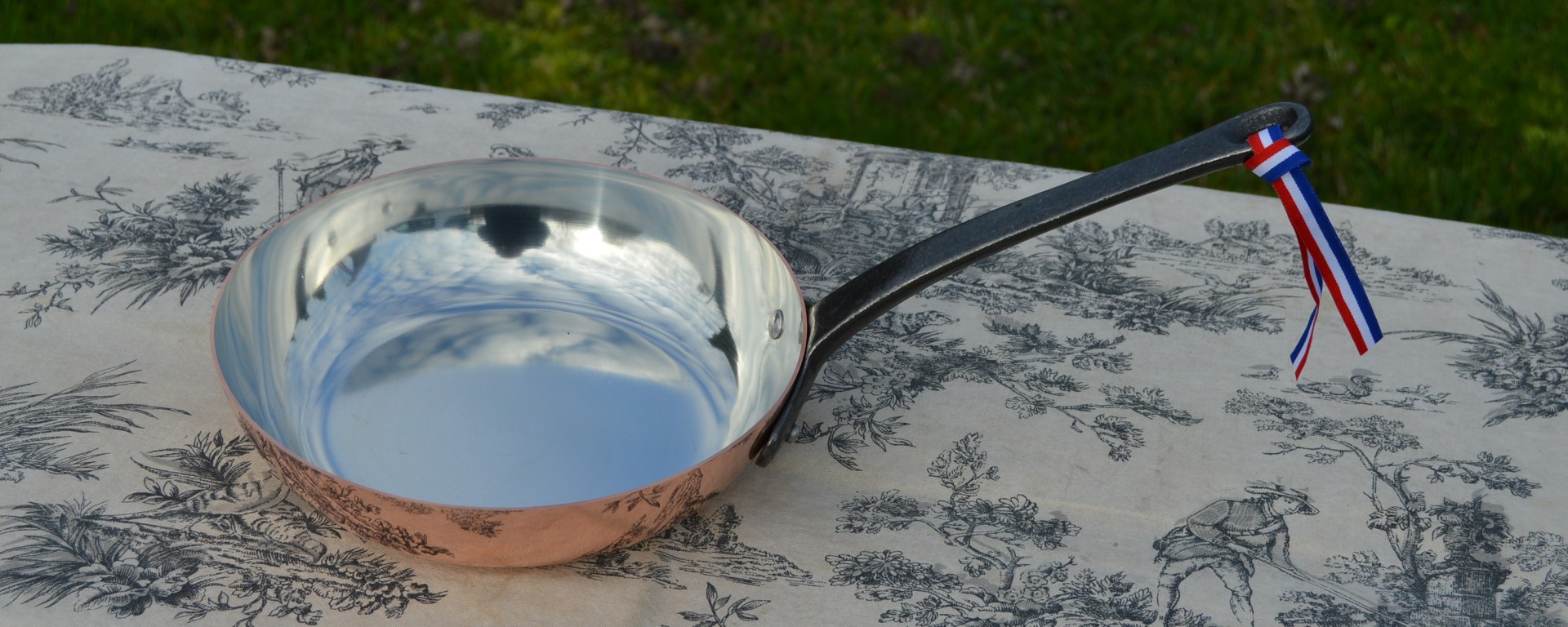
A good frying flipping pan or high sided sauté can be 1mm, food is moved around regularly and the high sides enable easy utensil free sautéing. It is extremely reactive to the heat and is ideal for quick cook dishes.
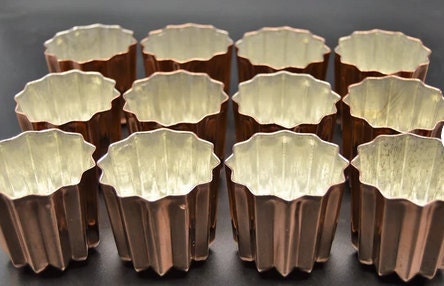
A good copper mould or mold is 1mm some of the older ones are a little thicker, the copper ensures even heat distribution all over the mold, thinner copper is more desirable in these instances, copper cools quickly and enables turn-out quicker with less chance of sticking. If the copper piece has a rolled rim then that is to reinforce the structure. If it’s good enough for Trottier…..
If you want a good patisserie pan go for a proper sugar pan or a good jam pan. Most good, vintage or new, jam, sugar or patisserie pans are between 1mm and 2mm. The point of copper pots in sugar work is that they can be heated to a very precise temperature. If they are thicker than 2mm then they do not cool down quick enough. The thicker the copper the slower it is in temperature change.
Here are the temperatures of cooking sugar you have to get to to attain to make a sugar syrup to a caramel. Note the difference in temperatures can be as little as 2 degrees – so precision temperature control is a must.
| Stage | Fahrenheit (degrees F) | Celsius (degrees C) | Appearance and Uses |
| Thread | 223-234 degrees F | 106-112 degrees C | Syrup will form a loose thin thread. Used for sugar syrups. |
| Soft Ball | 234-240 degrees F | 112-115 degrees C | Syrup will form a soft, sticky ball that can be flattened when removed from the water. Used for caramels, fudge, pralines, fondant, and butter creams. |
| Firm Ball | 242-248 degrees F | 116-120 degrees C | Syrup will form a firm but pliable, sticky ball that holds it shape briefly. Used for caramels, butter creams, nougat, marshmallows, Italian meringues, gummies, and toffees. |
| Hard Ball | 250-266 degrees F | 122-130 degrees C | Syrup will form a hard, sticky ball that holds its shape. Used for caramels, nougat, divinity and toffees. |
| Soft Crack | 270-290 degrees F | 132-143 degrees C | Syrup will form strands that are firm yet pliable. Used for butterscotch, firm nougat, and taffy. |
| Hard Crack | 295-310 degrees F | 146-155 degrees C | Syrup will form threads that are stiff and break easily. Used for brittles, toffees, toffee apples, hard candy, pulled poured and spun sugar. |
| Caramel | 320-360 degrees F | 160-182 degrees C | Syrup will become transparent and will change colour, ranging from light golden brown to dark amber. Used for pralines, brittles, caramel-coated molds, and nougatine. |
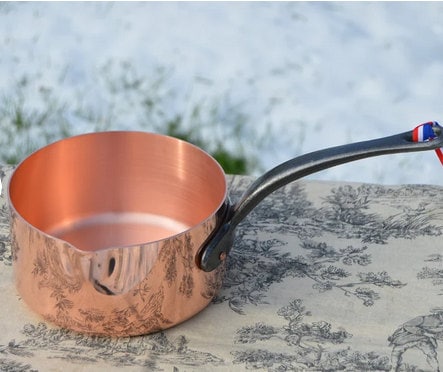
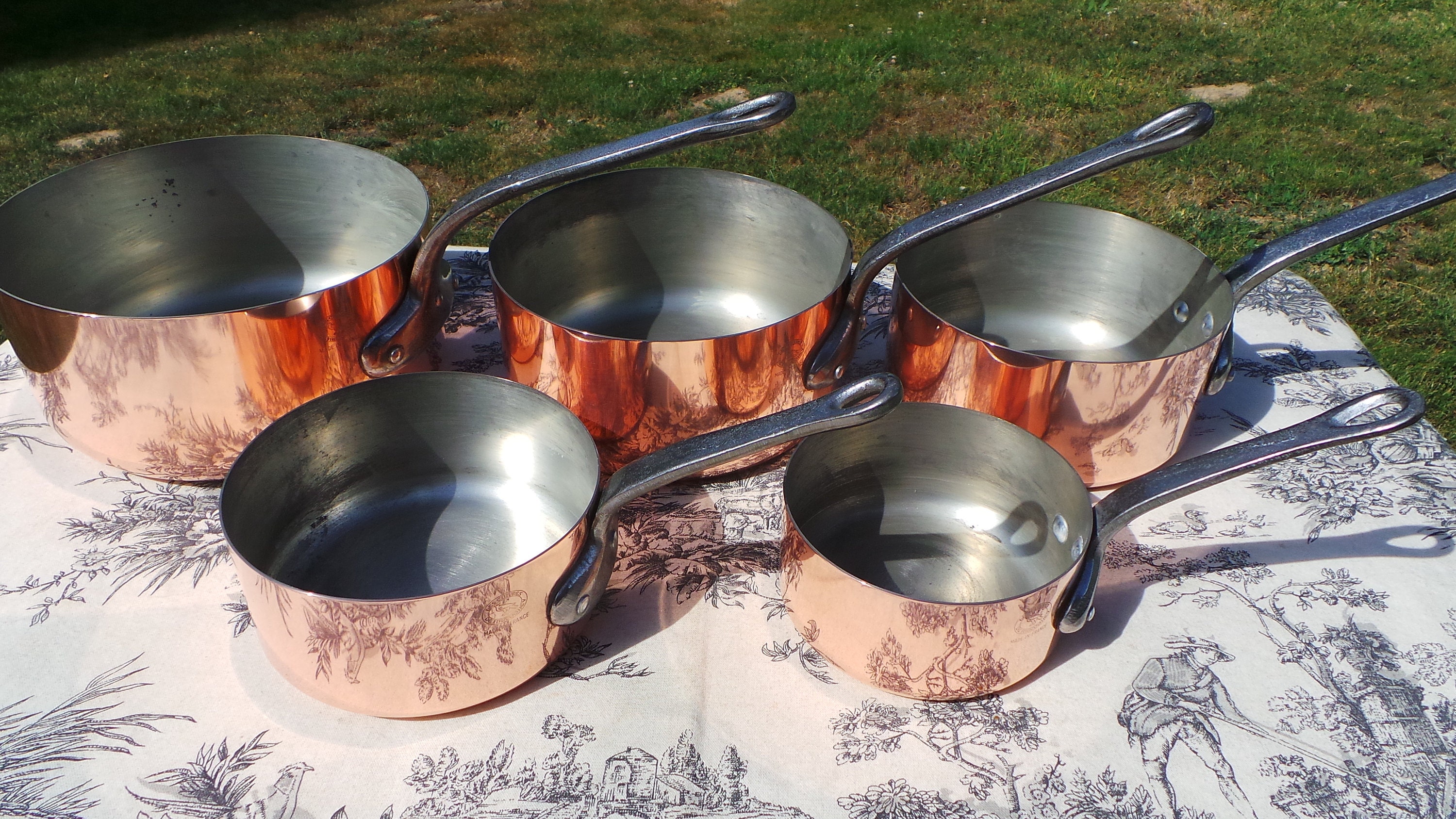
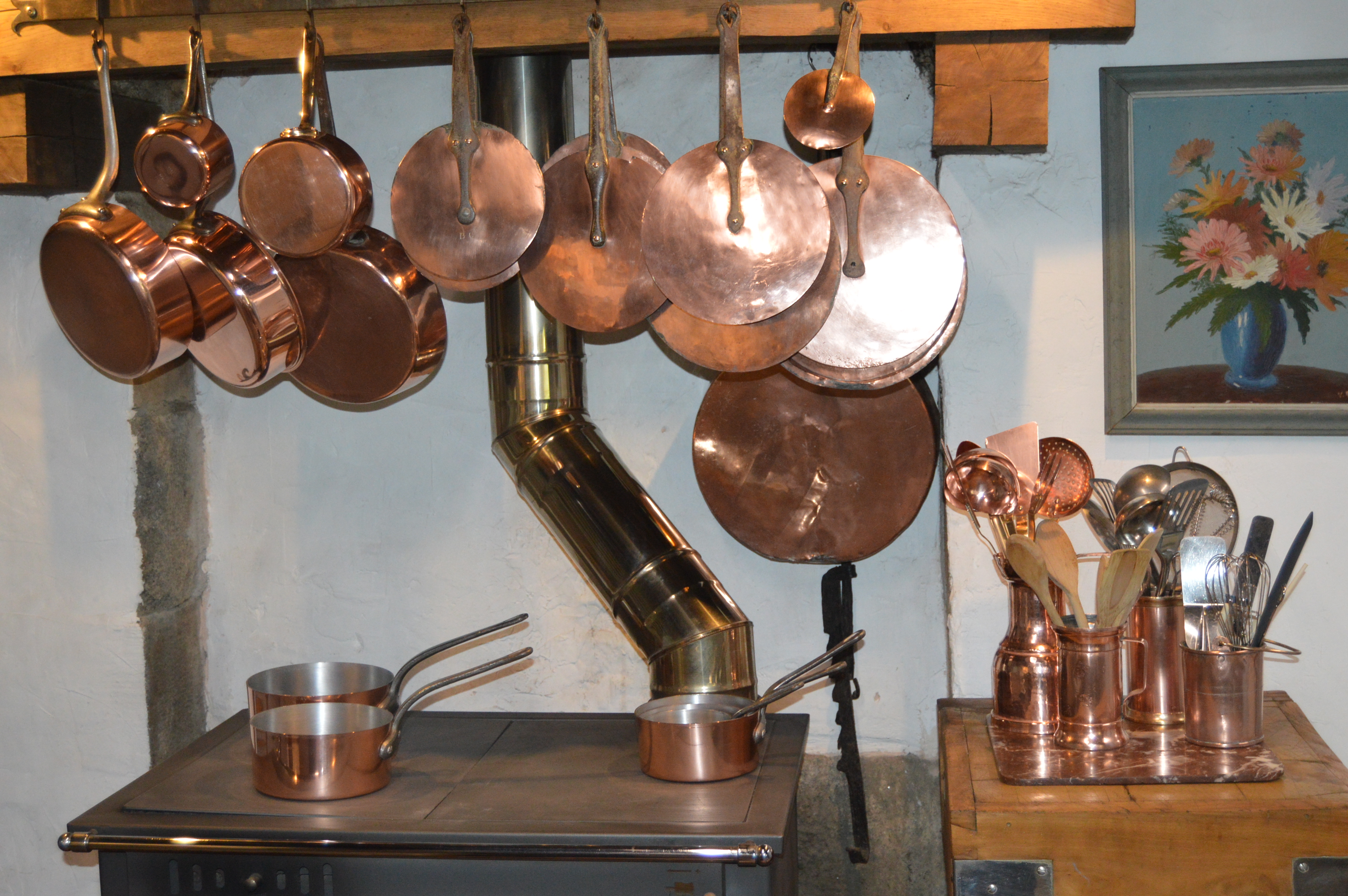
Anything over 1mm going onto 1.5mm is great for a busy family kitchen that has heat under them for a prolonged amount of time. They will sit and simmer like the big boys and be super reactive to your gas hob, not so much for any electric ring, of course. They will boil too and when you need to reduce the heat, will react quickly. Think about replacing your set of graduated stainless or aluminium pans – a graduated copper set is a great step up.
Copper is one of the metals most reactive to heat, should you remove the heat source the heat will dissipate rapidly, so it is easy to stop a pan of milk boiling over!
Most milk pans are 1-1.5mm thick, tall and super reactive!

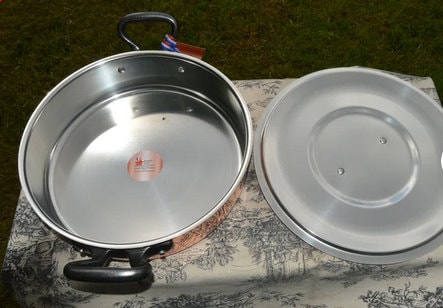
1.5-2mm thick copper can be easily used in any domestic and commercial restaurant setting, they can be used for sautéing and frying and don’t mind prolonged use on a daily basis. They are robust and sensitive enough for frying delicate fish to heavyweight steaks – always use soft utensils, wood or nylon for instance – you will maximise the length of time between re-tinning. Good 1.5-2mm pans look good and will last, well beyond any of the modern material pans.
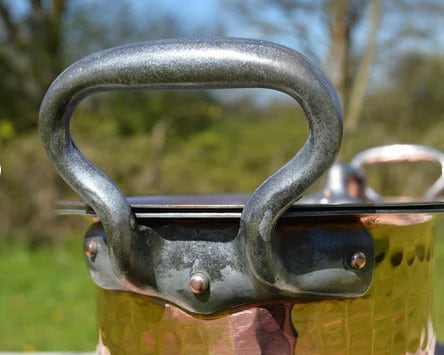
2mm is bordering on hotel quality use, these pans have the thickness to distribute heat evenly and will ‘sing all day’. They will ‘take a pasting’ in the most pressurised environments and will last a lifetime. Any Copper Pan with any interior that is 2mm or over is suitable for any type of cooking, in any environment and by anyone. They are very much the Goldilocks of the copper cooking world – suitable for everyone.
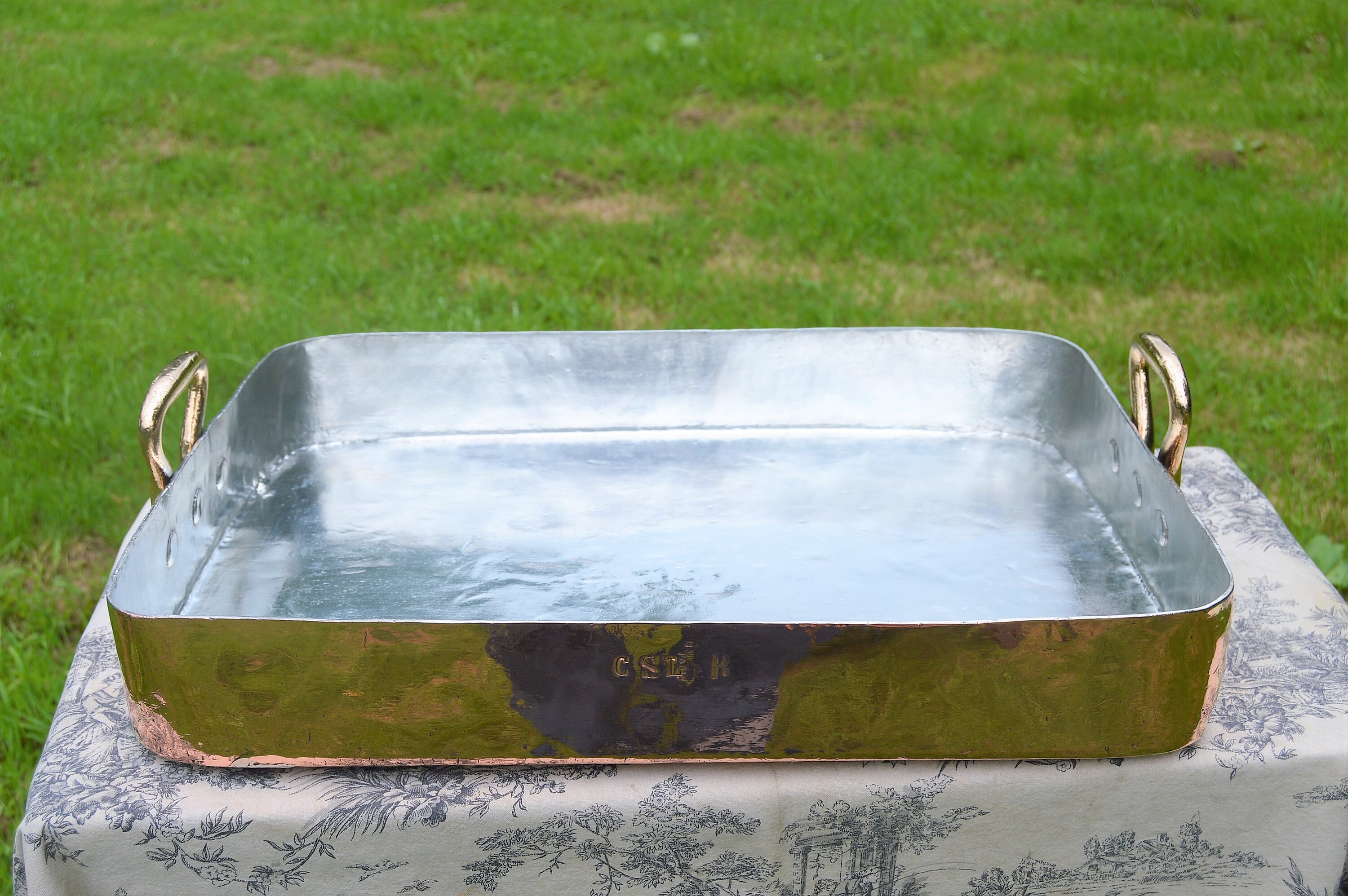
If you like pans that have a real story to tell then go for 3mm plus pans, a good sauté, ‘rondeau’, faitout, marmite, plat au four and all the other wonderful French copper pieces from the Golden Age* of copper between 1860 or so and 1950. These are the pinnacle of copper cooking and are totally commercial kitchen proof. Don’t expect to move some of them though! Not easily anyway – they are usually big heavy beasts and are some are only suitable for stoves that are used to mass catering. They retain heat in hotel and restaurant kitchens – rarely do they scorch, they make cooking several items one after another easy-peasy!
That is not to say us mere copper mortals shouldn’t aspire to owning some early, thick, commercial copper pieces. They can be difficult to find in good condition but when you have one……
If you are lucky enough to find some of the old Dehillerin, Legry, Jacquotot, Gaillard or any of the other ‘copper greats’ manufactured or retailed pans of 3-4mm, or a great set of 3mm **unmarked graduated pans, guard them and look after them – your great grand children will thank you for it!
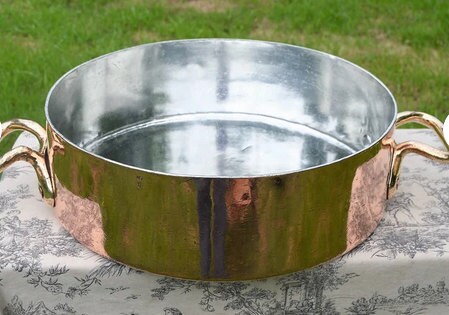
baking boiling broiling browning frying grilling heating roasting sautéing simmering sizzling steaming steeping stewing or toasting – Normandy Kitchen Copper NKC – The Home of Quality French Copper
©NormandyKitchenCopper 2022
https://www.normandykitchencopper.com
* With thanks to VFC
** Lots of copper pans from France have no manufacturing or makers marks at all.
All rights reserved © 2022 Normandy Kitchen Copper revised March 2025
https://www.normandykitchencopper.com


Reblogged this on Normandy Kitchen Copper.
LikeLike
Hi Bonnie! You can post your pans to Atelier du Cuivre in Villedieu les Poeles, https://www.atelierducuivre.fr +33 2.33.51.31.85 or at contact@atelierducuivre.fr – when they are done they post them back using Colissimo? It may be an option? It works well for us, although we pick most of ours up these days!
LikeLiked by 1 person
Thanks for a very good rundown on copper thickness. I admit to thinking everything I use has to be over 2mm, but the big ones are too heavy at that thickness. Wish I had a retinner down here in Provence.
bonnie near carpentras
LikeLiked by 1 person